Buying Property in Portugal: The One Thing Your Lawyer Won't Do (And Why It Could Cost You)
When I bought my first property in Portugal back in 2017, I did what every sensible person told me to do. I hired a lawyer. The documents came back clean. I signed. I felt very grown-up.
What nobody mentioned — and what took me a few properties to fully understand — is that your Portuguese property lawyer will almost certainly never set foot in the house you're about to buy. Most foreign buyers — South African, American, British, doesn't matter — assume the lawyer's job is to make sure the place is sound. It isn't. And that gap between what people think lawyers do and what they actually do is where some of the most expensive surprises in the Portugal property buying process happen.
What your lawyer is actually checking
A good Portuguese property lawyer will pull the:
certidão permanente (the property's record at the land registry),
the caderneta predial (the tax document),
and the licença de utilização (the habitation license).
They'll confirm the seller is really the seller, that there are no debts, no mortgages, no inheritance disputes, and no ex-spouses quietly lurking in the paperwork. They'll handle the promissory contract (CPCV) and the final deed (escritura). That's a lot. It's important. It's worth every euro you pay them. But notice what's missing?
Anyone, at any point, walking through the actual house with the actual plans in their actual hands.
Legal on paper, illegal in reality
Here's the thing about Portuguese houses, especially older ones in the areas foreigners love: they have a habit of growing.
A balcony gets enclosed (we call it a marquise). A garage becomes a bedroom. A roof terrace acquires a "small" extra room. A pool quietly appears. Sometimes a whole floor quietly appears.
None of which necessarily made it onto the official plans at the câmara municipal (the town hall).
Your lawyer sees the documents and the documents say everything is fine. The documents are not lying. The documents just describe a different house than the one you're buying. And when you go to renovate, sell, register for short-term rental, or pass the place to your kids — that mismatch becomes your very expensive problem.
My Lisbon property taught me this the hard way
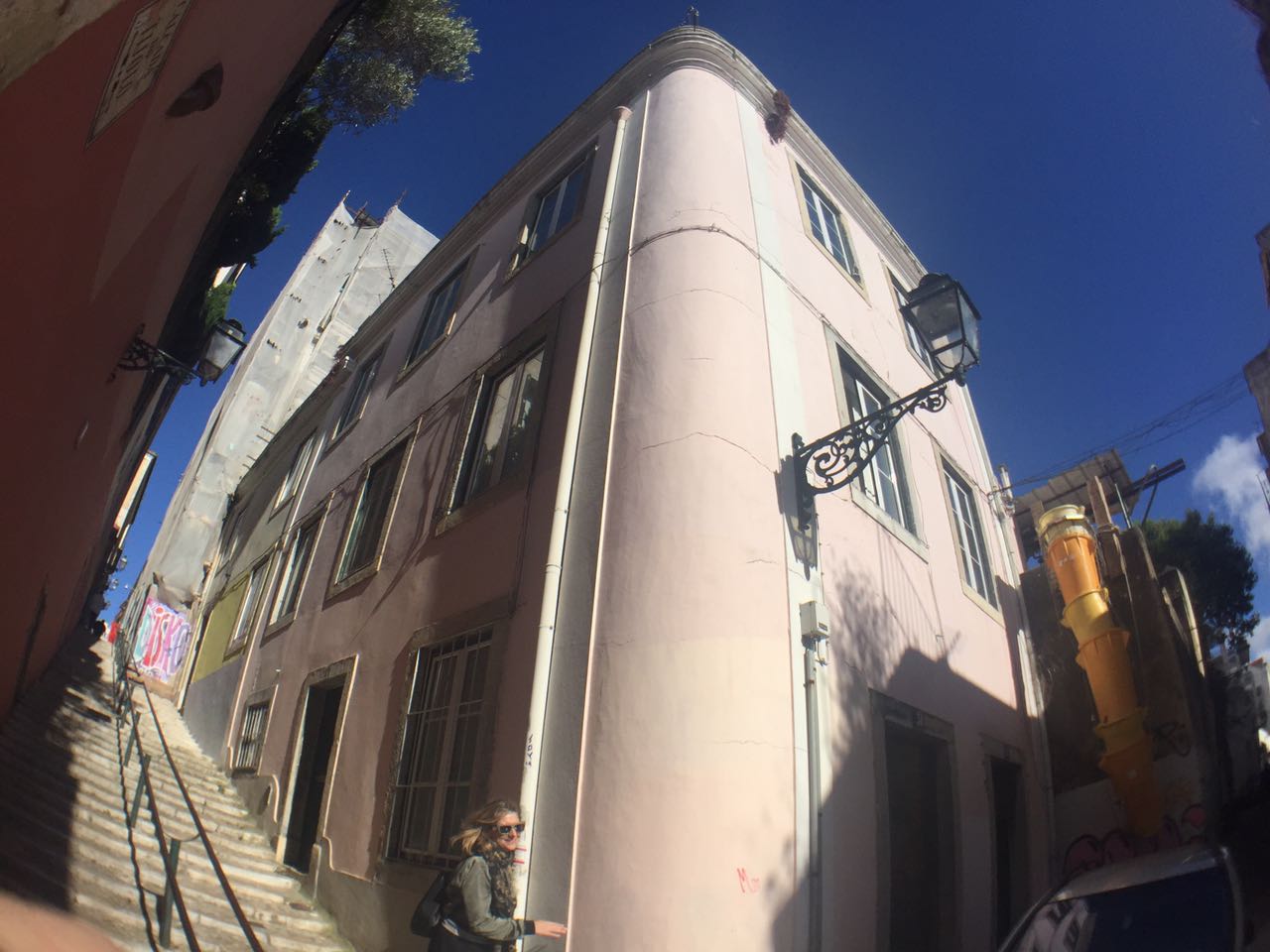
When I bought my Lisbon property, the documents were spotless. Lawyer happy. Notary happy. Me, very happy. I'd just bought a building - an old building in Príncipe Real that had been carved into three apartments, and mine was the top one.
The "second floor" of the duplex was a converted attic that opened straight out onto the most ridiculous view across the Príncipe Real rooftops.
That view was the entire reason I bought the place. Fast forward to when I went to register it as an Alojamento Local (the Portuguese short-term rental licence). Small problem: that gorgeous top floor wasn't on the plans at the câmara (the town council or municipality).
You can't licence a room that isn't on the books. I would not be able to register the third apartment for holiday lets without a very pricey and lengthy process. Nothing sinister. Just the very Portuguese reality that what's built and what's registered often had a quiet little argument about thirty years ago, and nobody bothered to tell the câmara.
What to do instead (without hiring an army)
If you're buying a house in Portugal as a foreigner, add two things to your checklist that most people skip:
The first is a site visit with a Portuguese architect — an arquiteto — who can put the official plans next to the actual building and tell you whether the two have ever been formally introduced. It costs a few hundred euros. It can save you tens of thousands.
The second is a buyer's agent — someone who is contractually on your side, not the seller's. This catches most foreigners off-guard: in Portugal, the agent showing you the property almost always works for the seller and is paid by the seller. Lovely people, often very helpful, but their job is to close the deal, not to talk you out of it.
A good buyer's agent walks the property with a different agenda. They look up at the roof, count the rooms, peer at the pool, and ask the awkward questions you might not know to ask:
Where's the licença for that extension?
Why has this been on the market for two years?
Was this attic always here?
In a property market where the deck tilts toward sellers, a buyer's agent is the closest thing to a referee you can hire.A lawyer protects you on paper. A second pair of expert eyes protects you in real life. In Portugal, you really do want both.
If you're somewhere in your own Portugal property journey and want to bounce a question off someone who's been through it more than once, drop me a message. I'd genuinely rather hear from you before the deed is signed than after.