Lost In Translation and What I Found There
I passed the B2 Portuguese exam. That's two levels higher than required for citizenship. I want you to know that, because what I'm about to tell you will be funnier in context.
My neighbours in Sesimbra are the kind of people who seem to exist to restore your faith in humanity. Retired, warm, with a garden so abundant it spills over into generosity. They regularly appear at our door with tomatoes, oranges, whatever's in season. One afternoon they invited us in and asked, "Querem tomar alguma coisa?"
I thought they wanted us to choose something from the garden. I was already mentally reaching for the tomatoes. There was a pause, the particular kind of pause where everyone is being very polite while nobody quite knows what is happening. Then it clicked. Tomar doesn't just mean take. It can also in some situations mean drink.
They were offering us something to drink, they were NOT inviting us to ransack their veggie garden.
B2, ladies and gentlemen.
The question everyone asks before they move:
"Do I really need to learn Portuguese?"
I get this one a lot. And the honest answer is: it depends entirely on what kind of life you want here.
If you're planning to live in central Lisbon, parts of Cascais, or the Algarve coast, and your social world will mostly be other expats, then no, you do not technically need Portuguese to function. You can rent an apartment, open a bank account, see a doctor, eat very well, and live for years entirely in English.
Portugal has made itself quietly accommodating to newcomers, and the younger generation in cities speaks better English than most native speakers I know. You can survive perfectly well without the language.
But a quiet feeling tends to creep up on people who stop there. It's the feeling of not quite fitting in. Of being adjacent to a country rather than in it.
And even when the people around you are speaking very good English, there is always something lost in translation. A joke that lands a beat late. A nuance that gets sanded off so the conversation can keep moving. A version of the person in front of you that you'll never actually meet.
The man who fixes your boiler will not speak it. The woman at the câmara who processes your residency paperwork will not be especially patient with you. Your neighbour who wants to tell you about her grandson's wedding will try, and then give up, and a small connection will quietly not happen.That is the real cost.
Not inconvenience. Connection.
So how hard is it, actually?
European Portuguese has a reputation for being difficult, and the reputation is earned. The Portuguese swallow their vowels, blur their syllables, and speak at roughly the speed of a chase scene. It sounds nothing like the Brazilian Portuguese you'll find on most apps.
The grammar is more forgiving than the pronunciation. Verb conjugations are a project but a logical one. The trickier part is the feel of the language, the rhythm of how people actually speak, which no textbook will teach you.
Realistic timeline? In my experience: longer than any app or course will tell you, and honestly still ongoing. There are weeks where it clicks and you feel almost fluent, followed by a morning at the junta de freguesia where you forget the word for "yes." There are moments where you're convinced you've regressed, that somehow you knew more six months ago than you do now.
And then, out of nowhere, someone says something at full Portuguese speed and you just... understand.
All of it. First time.
No replaying, no translating.
Those moments are worth every awkward pause that came before them.
Nobody mentions the English words either: English words, pronounced Portuguese. I once stood in a café completely blank while someone asked if I wanted "sheeezy baaites." Cheesy bites. Borrowed straight from English, returned unrecognisable. Nobody warns you about this. It should be on a list somewhere.
What the words tell you about the people
Here is the part nobody warned me about.
The closer you get to the language, the more you understand about the people. A language is not just vocabulary and grammar. It is a map of a nation's psychology. The things a culture says without thinking, the phrases that don't translate cleanly into English, tell you more about who people are than any guidebook ever could. A few examples that explain Portugal better than I ever could in English:
Aproveite. This is the one I find hardest to translate. The dictionary will give you "enjoy" or "make the most of it," but neither is right. People say aproveite to you when you're heading out into the sunshine, when a meal arrives at your table, when you mention you're taking the afternoon off, when there are still strawberries at the market and won't be for long. It carries a tiny note of urgency, a reminder that the good thing in front of you is not promised to last, so be in it while you can. The closest English gets is "savour it," but that sounds precious and aproveite is not precious at all. It is practical. It is a country that knows the sun goes in.
Com calma. "With calm." Said to you constantly, by everyone, about everything. The plumber will be there com calma. Your residency card will arrive com calma. Once you stop hearing it as a brush-off and start hearing it as a worldview, the country gets considerably easier to live in.
Conviver. To share life with. Not socialise, which sounds transactional. Not coexist, which sounds barely tolerant. Not "hang out," which sounds like teenagers killing time. Conviver is what your neighbours do with you over years of small coffees and casual hellos, what families do at lunches that stretch into the afternoon, what a village does in the square on a Friday evening. The noun convívio is the gathering itself. The Portuguese have built a word around the idea that the people who happen to be around you are worth spending real time with, on purpose, regularly. It is one of the first things you notice when you arrive from somewhere that doesn't have it.
Com licença. "With permission." Said when squeezing past someone in a narrow aisle, stepping into a room, leaving the dinner table, interrupting a conversation, reaching across to the bread. Also said multiple times in the closing minutes of any Portuguese phone call: three or four com licenças, two está bems, a combinado, an abraço, and only then are you allowed to hang up. English has "excuse me," but "excuse me" is mostly about getting someone's attention or apologising. Com licença is something else. It is a tiny formal ritual of acknowledging that you are about to enter, or leave, someone else's space, and it is performed dozens of times a day, by everyone, without fuss. The first time you accidentally cut past a stranger in a doorway without saying it, you'll feel the absence. The country is held together, in part, by these small courtesies.
These are not just words. They are instructions for how to be Portuguese.
What actually helped me
I am wary of giving language-learning advice because every brain is different, but a few things genuinely moved the needle for me.
#1 An online school called Portuguese Language Lessons (portugueselanguagelessons.net).
Emma, who runs it, does a really good blend of grammar, culture, and actual opportunity to speak. Most apps will teach you Brazilian Portuguese and leave you stranded at a Lisbon café. Don't make that mistake. Look for European Portuguese specifically, and look for a real human on the other end of it.
#2 A book club, of all things.
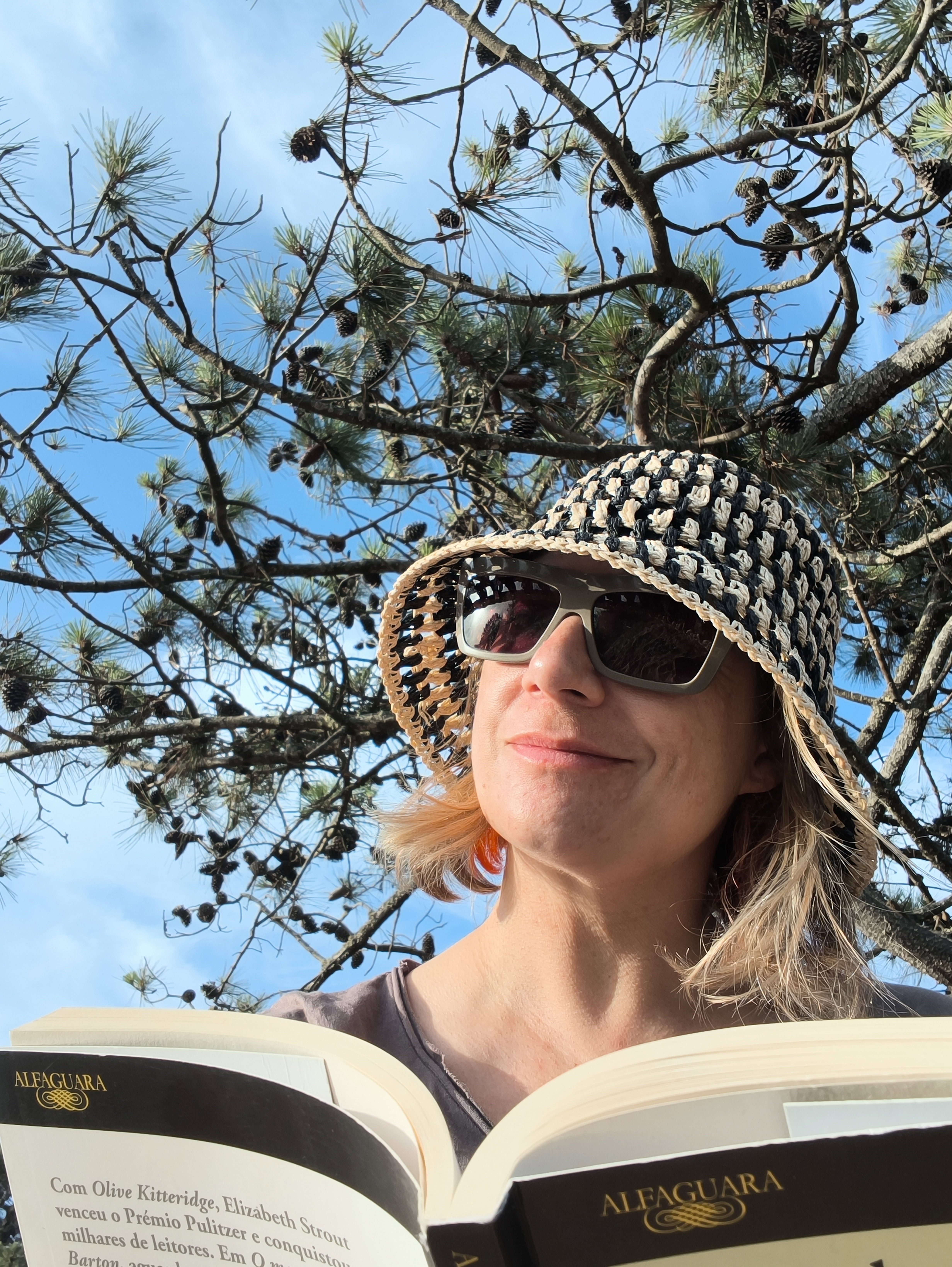
I joined Emma's reading group, where we read a book every other month and meet up to talk about it in Portuguese. The genius of this is the consistency. It is one thing to study; it is another to know that in three weeks you will be sitting in a room expected to have opinions, in Portuguese, about chapter four. Nothing motivates conjugation quite like the prospect of looking foolish in front of people you like.
#3 Signing up for the B2 exam.
This one surprised me. I did not need the certificate (citizenship only requires A2), but the act of registering, paying, and putting a date on the calendar pushed my Portuguese to a level it would never have reached on its own. There is something about a real deadline with real stakes that no amount of "I should study more" can replicate.
#4 Try to get out of the expat bubble.
Sesimbra is a small town. The man at the bakery does not speak English to me, partly because he can't and partly because by now he refuses to. Both of these are gifts.
#5 Someone to remind you that it's not all about books and pencils. A lot of it is context.
My husband Svend has never sat a Portuguese exam in his life. But he has something I've had to grudgingly admit is more useful in daily life than any certificate. He reads context like a native. More times than I'd care to count, I have been standing in a conversation carefully replaying the first sentence in my mind, translating word by word, while Svend has already understood the entire situation, responded appropriately, and moved on. He works out what's happening from the faces, the gestures, the energy in the room. I'm still conjugating.
Together we make one complete Portuguese speaker.
What I'd tell you if you asked
You can move to Portugal without speaking Portuguese. Plenty of people do. Some of them are perfectly content, and some of them carry around that low-grade feeling of being on the outside of a party they were technically invited to. It depends a lot on what you came here for.But if you want the country to open up to you, if you want your neighbours to become actual neighbours rather than friendly strangers, if you want to understand why people here do the things they do, you'll need to put in the work. Not all at once. Not perfectly. Just consistently, with humility, and with a willingness to be the person who confidently asks for tomatoes when they're being offered tea.
I came to Portugal thinking I was learning a skill. Turns out I was learning a people. And somewhere in the fumbles and the false cognates and the garden confusion, I started to feel, just slightly, just around the edges, like I might be becoming one of them.
It doesn't matter what level you eventually reach. It's a work in progress, and it always will be. It's the act of learning, the motion of delving into the people, that will take you further than any perfectly constructed sentence ever will.
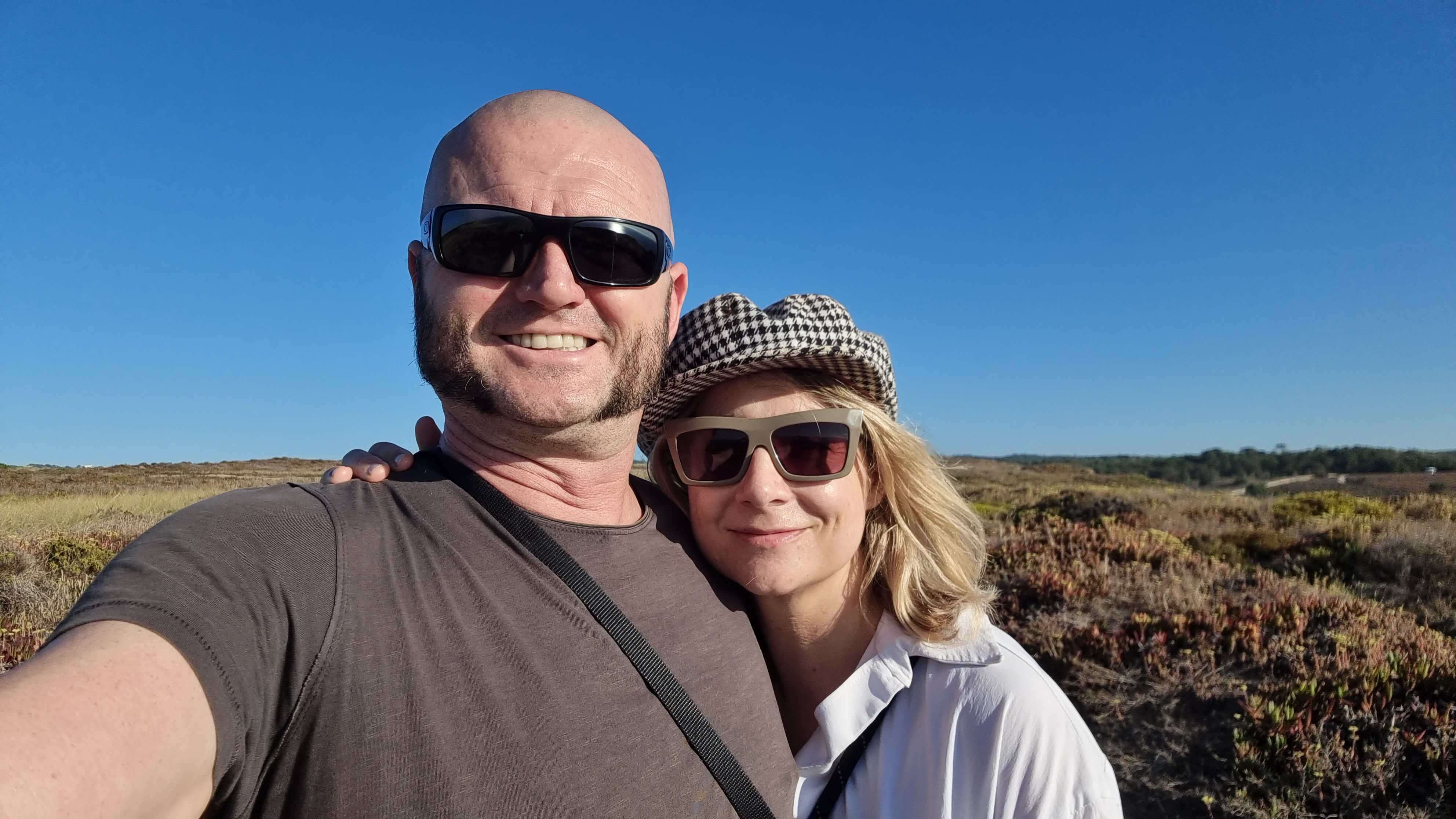
I'm Moira. South African, Portugal-based, B2 certified, and still occasionally asking for vegetables when offered a drink. Portugal Horizon is where I share the honest version of life and property here.