Portugal Property Prices: Why "Comps" Don't Mean What You Think
Where the real sold prices hide, and why even the pros are half-guessing
Back in South Africa, if you wanted to know what a property was really worth, you could just go and find out. Pull a Lightstone report on the place for the price of a couple of coffees and there it is: what it last sold for, what the neighbours sold for, the lot. Sold prices weren't some guarded secret. They were a small fee and a few minutes away.
Then you move to Portugal, and the same little routine stops working. You just won't find it.
Not because Portugal is hiding something sinister, but because the system here was never built to show you. And once you understand that, a lot of your buying experience starts to make more sense, even if it doesn't get any less annoying.
It also explains a small catch you'll meet later, the moment your real estate agent slides you a list of "comps" and you assume the word means here what it means back home. It doesn't. Hold that thought, we'll get to it.
What you actually have access to
There's no easy, low-cost way to look up sold prices the way there is back home. What exists instead:
Asking prices, which you can see on every portal, and which mean roughly nothing once you understand how negotiable they tend to be.
Confidencial Imobiliário, which is the closest thing to real evidence. Its free index shows city and regional price-per-square-metre trends, and its paid SIR data goes a step further, giving you averages and ranges built from actual notarial sales, broken down by small zone and property type. That matters, because it's based on real deeds rather than asking prices, which already puts it streets ahead of the portals. But it's still aggregated. It will tell you what a one-bed in your micro-zone typically traded for, not what number 14 specifically sold for. And it sits behind a subscription, so in practice most buyers only ever reach it through an agent who already has access.
Your own agent's word, which is only as good as your agent. Here's the thing most buyers don't realise: both the proper transaction data and the listing tools the trade uses are sold as professional subscriptions, priced for businesses and locked into annual contracts, not something it makes any sense to buy for a single purchase. So your agent is usually your only practical way in, which is the single biggest reason a good one is worth their commission.
That's it. That's the toolkit.
And notice how much of it you can only really get at through an agent. Try to go it alone, which I'd genuinely advise against, and you're left with asking prices and your own detective work.
I once sat with a spreadsheet trying to reverse-engineer comparables from old listing screenshots I'd saved, like some kind of property sleuth. It worked, sort of. It also ate hours I needn't have spent if I'd just gone to someone with proper access from day one.
Why it's like this
Part of it is structural. Land registry (Conservatória do Registo Predial) and tax records (Finanças) hold the actual transaction data, but it's not packaged up for the public the way it is in markets with a strong consumer-data culture. And part of it is just market maturity.
Portugal's property market modernised fast over the last decade, especially after the Golden Visa boom, but the data infrastructure didn't keep pace with a wave of buyers who'd grown up expecting transparency as standard.
Whatever the reason, the effect on you as a buyer is the same: you're often negotiating with less information than the person on the other side of the table.
Why this isn't just inconvenient, it's expensive
Here's the part that should actually annoy you. This isn't a quirky local inefficiency you shrug off like the bureaucracy or the paperwork. It actively inflates prices.
Think about what real sold-price data does in a transparent market. It anchors everyone to reality. A seller can't ask 30% above the last three comparable sales and expect to get away with it, because every buyer walking through the door already knows what the building down the road went for. The asking price has to behave itself.
Take that anchor away and asking prices become a kind of theatre. Sellers price to the top of what they imagine a desperate, data-blind foreigner might pay, not to what the market has actually proven a unit is worth. And buyers, especially ones coming from places where a quick report does the thinking for them, have no instinct for when a number is reasonable versus fantasy. So they pay it. Then that inflated number becomes the "comparable" the next seller points to, even though nobody can verify it ever really sold for that.
It's a feedback loop with no floor underneath it. Every transaction that closes without real scrutiny pushes the next asking price up a little further, and there's no public record to call anyone's bluff.
I've watched this play out in real time: two near-identical apartments, sold months apart, landing at wildly different prices, and neither buyer ever the wiser. They each thought they'd done their homework. They'd just done it blind.
And don't expect the bank to save you
You'd think, with all this guesswork floating around, the bank valuation would at least be a sobering dose of reality. The official, sensible, numbers-don't-lie checkpoint before anyone hands over real money. Let that hope go now.
Here's the thing most buyers don't realise: the bank valuation (avaliação bancária) was never designed to tell you what a property is worth on the open market. Its job is narrower and colder. It's estimating what the bank could recover if you defaulted and they had to sell the place themselves. That's a security number, not a market number. Two completely different questions, routinely confused as one.
Which is why the sale price and the valuation so often disagree. Back in 2021, when someone last did a proper national breakdown (a BA&N analysis of INE data), sale prices were running an average of 5.4% above bank valuations, and in foreign-buyer hotspots the gap was enormous: over 40% in Lagos and Lagoa, around 22% across the Algarve, 16% in Lisbon. A handful of quieter regions, like the Alentejo, even went the other way, with valuations sitting slightly above sale prices.
Since then, bank valuations have been sprinting to catch up, climbing more than 17% in 2025 alone, which has actually narrowed the gap rather than widened it. By 2025, with the national median sale price around €2,076 per square metre against a median valuation near €1,949, the country-wide gap had settled to roughly 6 to 7%. Lisbon's had tightened to about 7%, the Algarve's to somewhere around 13%. The headline number keeps moving, but the lesson underneath it doesn't: the valuation is not the market price, and the two drift furthest apart exactly where foreign demand runs hottest.
Why the gap?
Partly because valuers are working off a database that's always a step behind a live market, especially where prices are climbing fast. Partly because valuations discount the things buyers get emotional about, like a sea view or a fresh renovation, in a way the market doesn't. Partly, too, because plenty of Portuguese properties carry things the paperwork simply doesn't recognise: an unlicensed extension, a converted basement, a pool that never made it onto the official plans. The valuer can't credit any of that, and may flag it as a liability, but a buyer standing in the garden looking at the pool will happily pay for it (those extras come with their own legal headaches, which is a post for another day). And partly, frankly, because the same lack of real sold-price data that frustrates you is frustrating the valuer too. Nobody in this chain is standing on solid ground. They've just got an official-looking PDF and a stamp at the end of it.
The practical sting: if the bank's number lands below your agreed price, the loan-to-value maths runs against that lower figure, and your own cash contribution goes up to cover the gap. Worth knowing before you fall in love with a place, not after your mortgage offer comes back smaller than you budgeted for.
And in case you think this only bites buyers
I'm living the other side of this right now. I'm selling a small garden apartment in central Lisbon, a place I've rented out long term and run on Airbnb for years, and all I want is to price it fairly. Not top-of-the-fantasy-range, not leaving money on the table either. Just right.
And you'd assume that, of all people, I'd find this easy. I've bought and sold more places in this country than I can count on one hand. Yet I sat down to price my own flat and walked straight into the same wall everyone else does. The portals only show asking prices, which told me almost nothing.
Here's the bit that quietly catches out anyone arriving from abroad. Ask an agent for "comps" and what you'll usually get is a Casafari report, Casafari being the main tool the trade leans on here. Back home, "comps" means verified comparable sales: what real properties down the road actually sold for, on the deed, in cash. Here the same word points at something much softer, a sweep of listings and an algorithm's best guess, not a record of what anything verifiably changed hands for. Same reassuring word, very different substance. If you don't know to ask the follow-up question, you'll nod along thinking you've seen the evidence, when you've really just seen other people's hopes.
And the guess can be wildly off.
Casafari looked at my renovated apartment, decided it was a bog-standard studio, gave the private garden essentially no weight, and produced a number tens of thousands of euros below anything a sane person would accept. It was stuffed with old listings nobody had ever bothered to take down. And while it lets you tick a box for "garden" or "view," it can't capture any of the detail that actually swings the number: how big that garden is, what condition the apartment's in, which floor you're on. All of which move the price, and none of which fit in a checkbox. If I'd trusted it, I'd have handed the place away.
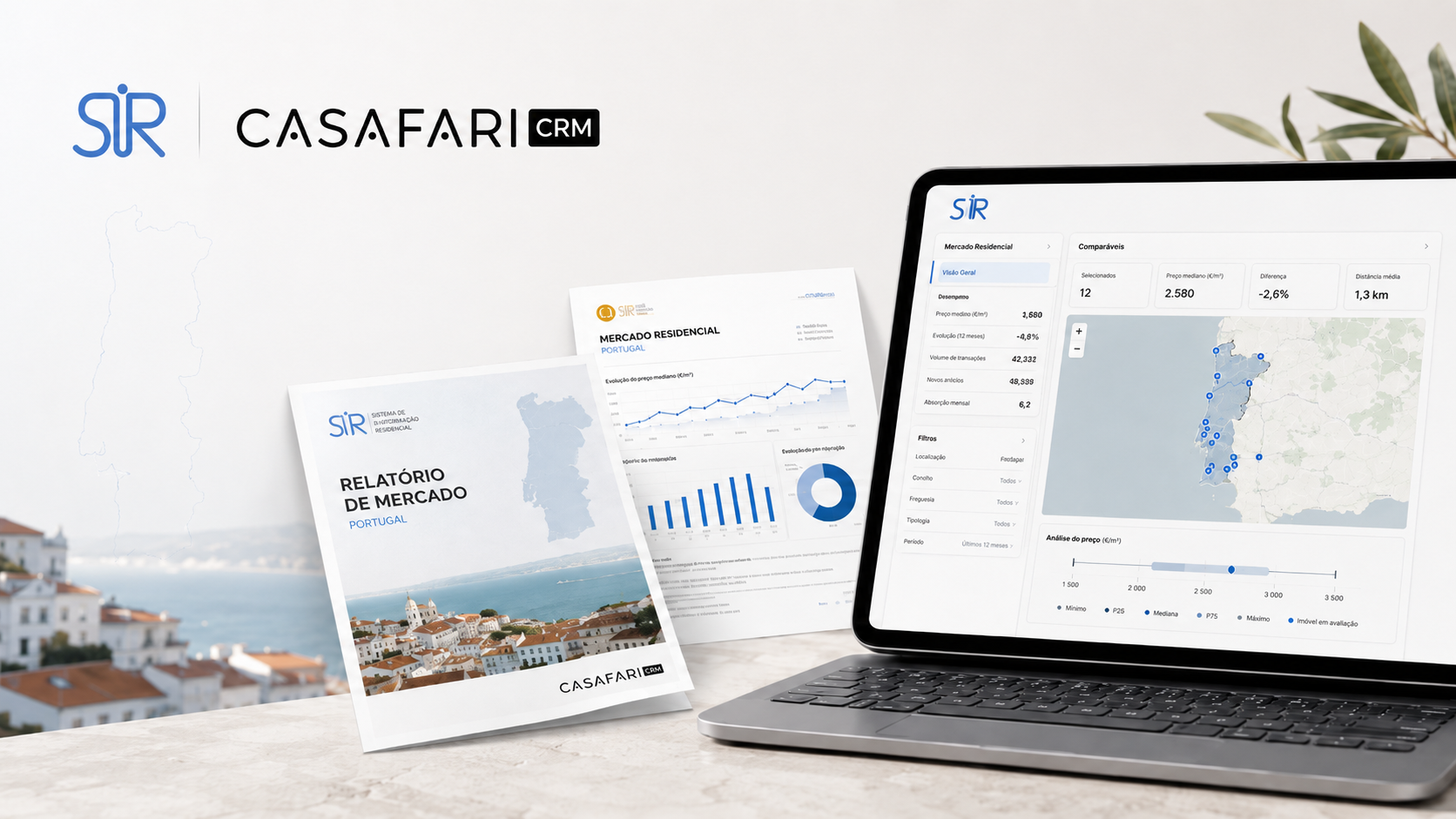
The closest thing to real evidence was the proper transaction data, the actual notarial sales for my micro-zone, the kind you only reach through a paid subscription or an agent who has one. And it genuinely is the best thing going.
But it comes with two catches even the good data can't shake. First, it's aggregated: it only tells me what a square metre traded for around here, on average, across everything that sold. Second, it's always running a good six months or more behind real life, because deals take an age to close, register, and filter through to the system, so in a market climbing this fast it's quietly describing a younger, cheaper version of today. And on top of both, it still can't see that this particular flat has a private garden, a full renovation, and sun all afternoon. No database can. The numbers get you to the doorway. A person who's actually closed deals on these streets, who knows what outdoor space really fetches and how much a renovation moves the needle, gets you the rest of the way.
Piecing those two halves together, the data and the local knowledge, is the whole game here. And even after all the times I've done it, I still can't skip it. So if I'm having to work this hard to land on a fair number, imagine a couple flying in from Johannesburg or Surrey for a few days of viewings.
What this means for you, practically
It means the asking price is a starting position, not a fact.
It means a buyer's agent who actually has a network and has closed deals in that specific area is worth more than one who just has access to the same portals you do.
Just remember that access and willingness aren't the same thing: as I've written about in [whether your buyer's agent is really showing you the whole market](https://www.portugalhorizon.com/blog/buyers-agent-portugal-whole-market).
Not every agent puts that access to work for you, even when they have it. And it means you should be asking, directly: "what have comparable units in this building or street actually sold for recently?" Not "what are similar units listed for."
If your agent can't answer that with anything more specific than a shrug and a portal search, that's useful information too.
The honest bit
I'm not going to pretend there's a secret workaround that gets you the data instantly. There isn't. What there is, is experience, and a network of people who've been through enough transactions to have a feel for real numbers versus wishful ones. That's most of what you're actually paying for when you pay for good advice here. Better to know that going in than to discover it after you've overpaid for a flat because the listing price felt "about right."
I'm Moira.
I've bought, sold, rented out, Airbnb'd, and right now I'm trying to put a fair price on my own flat in Lisbon, across more Portuguese properties than I care to count.
I write Portugal Horizon to help fellow South Africans, along with the Brits, Americans, and anyone else dreaming of a life here, avoid the mistakes I've already made on your behalf, like ever taking an asking price at face value.
You're welcome.
Sources:
2021 national valuation-gap analysis (BA&N / INE data), via Vida Imobiliária
https://vidaimobiliaria.com/noticias/mercados/preco-casas-supera-40-valor-avaliacao-imobiliaria/) - the 5.4% national figure and the regional breakdown.
The 40%+ sale-to-valuation gap in Lagos and Lagoa, via Postal do Algarve
https://postal.pt/economia/diferenca-entre-valor-da-venda-e-valor-da-avaliacao-dos-imoveis-supera-40-em-lagos-e-lagoa/ The Algarve hotspot data. 2025 median house prices in Portugal (€2,076/m²), via idealista -the current sale-price figures.
2025 record bank valuations, via idealista (https://www.idealista.pt/news/financas/credito-a-habitacao/2025/10/24/72254-valor-da-avaliacao-bancaria-atinge-novo-maximo-em-setembro) - the current valuation figures.
Confidencial Imobiliário (SIR transaction-price data)(https://www.confidencialimobiliario.com/) -the source behind Portugal's real sold-price statistics. The 2025 regional gap percentages are approximate, calculated from median sale price against median valuation.