Two Apartments One Building, €225,000 Difference In Price. One of Them Is Mine.
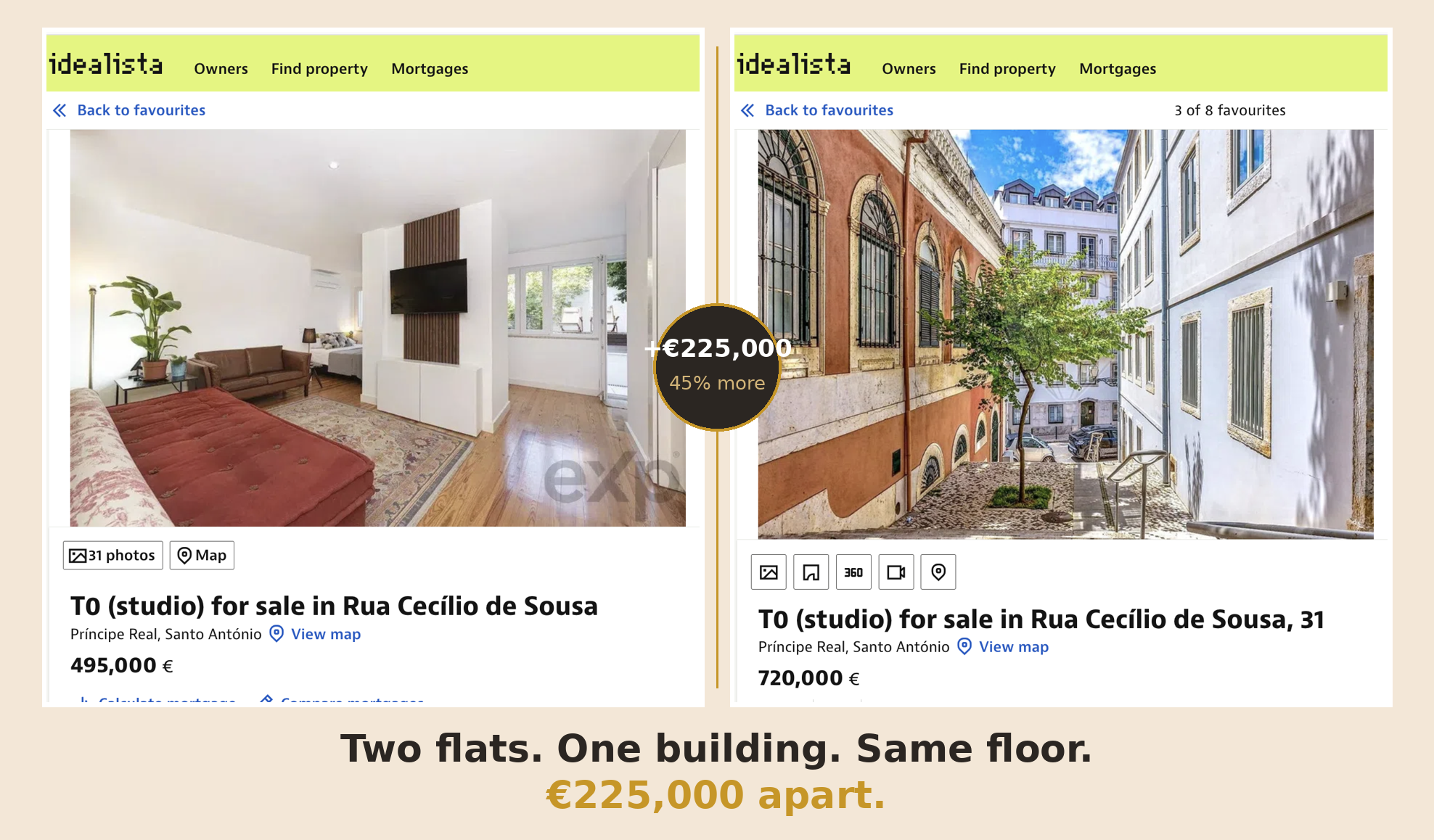
Two apartments on the same lower garden level, directly opposite each other.
Almost identical total areas. Completely different ideas about price.
Once my little garden apartment in Príncipe Réal was listed for €495,000, I had a quick squiz on Idealista to see how it looked. That was when I discovered the apartment directly across the landing was also for sale. The asking price was €720,000.
Not an apartment upstairs. Not the penthouse. The other cave, the Portuguese description for our lower garden level. Mine is cave direita. Theirs is cave esquerda. Two front doors facing each other with, apparently, €225,000 lying on the landing between them. And yes, mine is the cheaper one. This is where writing about wishful asking prices becomes personally inconvenient.
The cleanest “comp” I’ll ever get
A few weeks earlier, I had written about why property comps in Portugal don’t mean what many foreign buyers think they mean. Back in South Africa, a comparable normally means a verified sale: what a similar property actually changed hands for.In Portugal, it very often means another listing.
This distinction sounds dry until the market places a near-mirror image of your own apartment across the landing and prices it forty-five percent higher. Mine has 43 square metres inside and a 45-square-metre private garden. Theirs has 55 square metres inside and a 36-square-metre terrace. Idealista advertises the total areas as 90 and 91 square metres. One square metre apart on the portal. €225,000 apart in price.
Both were completed in 2015 and renovated to the same specification: wooden floors, acoustic double glazing, electric shutters and air conditioning.They are not identical. Property is never quite that obliging. Mine has the larger outdoor space, while theirs has twelve additional square metres inside. One buyer may care more about the extra room. Another may fall for the garden.But you would struggle to find two cleaner comparison subjects without constructing them in a laboratory.Idealista calculates mine at €5,500 per square metre and theirs at €7,912.
Same street. Same building. Same landing.
Before I make myself the sensible one
It would be very convenient for me to announce that my apartment is correctly priced and the other owner has wandered into fantasy. I don’t actually know that.
Perhaps mine is conservative. Perhaps theirs will sell for €720,000. Perhaps both will negotiate down. The market has surprised me before and will almost certainly enjoy doing it again. At this point, neither price is a market value.They are two opening positions with professional photographs. An asking price proves only that someone was willing to ask it. That is precisely why this comparison matters.
The €720,000 listing does not prove that mine is underpriced. Mine does not prove that theirs is overpriced. But once both numbers exist, they begin influencing what everyone thinks the building is worth.
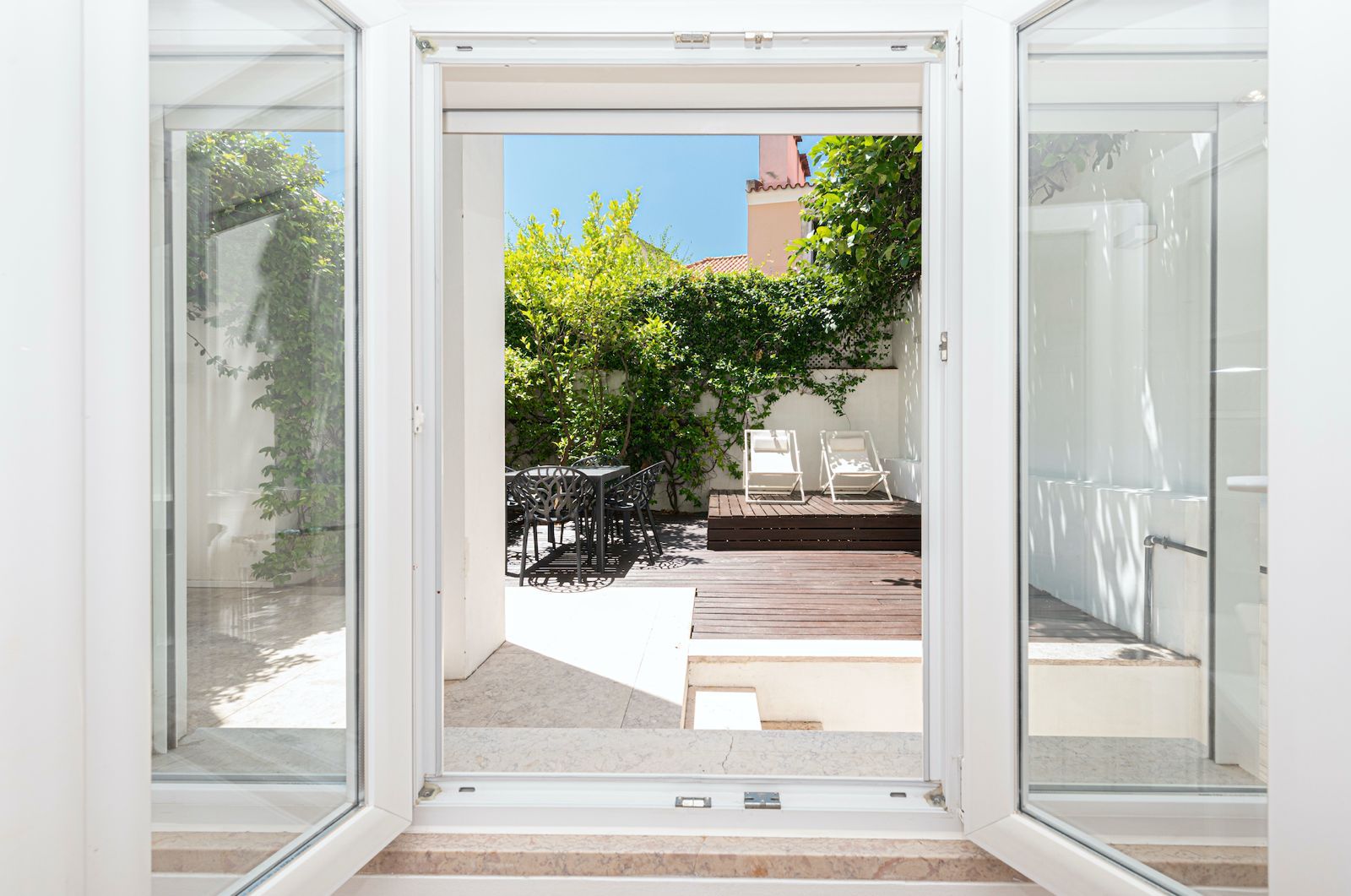
The thing no database can see: sun, a garden you walk straight into, and about four seconds to understand it.
How a wish gets into the spreadsheet
Imagine another owner in the building decides to sell next month. An agent prepares a valuation report and finds these two listings. Suddenly, the apparent price range for two almost identically sized properties in the same building is €495,000 to €720,000. The higher number has not been tested by a buyer. No bank has financed it. No deed has been signed. It is still just an asking price. But it is already wearing a little suit and pretending to be data.The next seller naturally leans towards the top of the range. A buyer sees several similarly ambitious listings and begins to think the number must be normal. Another agent uses those listings in the next valuation report.
The price does not have to achieve a sale to affect the market.
It only has to be seen.
The trap works on sellers too
When I wrote the original article, I was mostly thinking about buyers trying to negotiate without reliable sold-price information.I had not fully appreciated what the same fog does to a seller.Of course €720,000 made me question my own price. If the apartment across the landing is worth that, am I leaving a small fortune on the table? Am I the sensible seller, or simply the mug who did too much homework?
That is how the feedback loop gets you.
The neighbouring listing did not change the transaction data I had studied. It did not add a square metre to my apartment or alter the garden. It gave me no new evidence at all. It added pressure.
The higher price did not change my apartment. It changed the room in which mine was being judged. It would be extremely easy to nudge my price upwards simply because someone else aimed higher.
But then the next seller would point to both of us, and the wish would have moved one step closer to becoming the market.
The carefully researched number starts looking like the mistake.
The honest ending
I am selling one of these apartments, so I have rather more than an academic interest in the outcome.
I still believe €495,000 is a fair asking price for mine. I arrived at it through the available transaction data, local knowledge and an honest assessment of the property. But believing I have done the work is not the same as knowing what a buyer will pay.
So I am going to treat these two apartments as a live experiment and update this post when something changes. For now, we do not have two property values. We have two asking prices.
And €225,000 sitting between two front doors.

I'm Moira. I've bought, sold, rented out, and Airbnb'd more Portuguese properties than I care to count, and right now I'm selling a garden studio in Príncipe Real and resisting the urge to price it like the neighbours.
I write Portugal Horizon to help fellow South Africans, along with the Brits, the Americans, and anyone else dreaming of a life here, avoid the mistakes I've already made on your behalf.
You're welcome.
Sources and related reading
My garden apartment: €495,000 on Idealista
The apartment across the landing: €720,000 on Idealista
Portugal Property Prices: Why “Comps” Don’t Mean What You Think