Speed-Dating Portugal: A Beginner's Guide to Every Region
You've decided on Portugal. You just can't place any of it on a map yet, and every town sounds like either a saint or a seafood dish.
"Portugal" is not one place, and it is definitely not one property market. It's really dozens of them, sometimes changing from one town to the next, and even the eight regions on this map are a trench coat thrown over a lot of very different places.
So let's speed-date the whole country. One honest round per region, about a minute each, and by the end you'll know who's worth a second date?
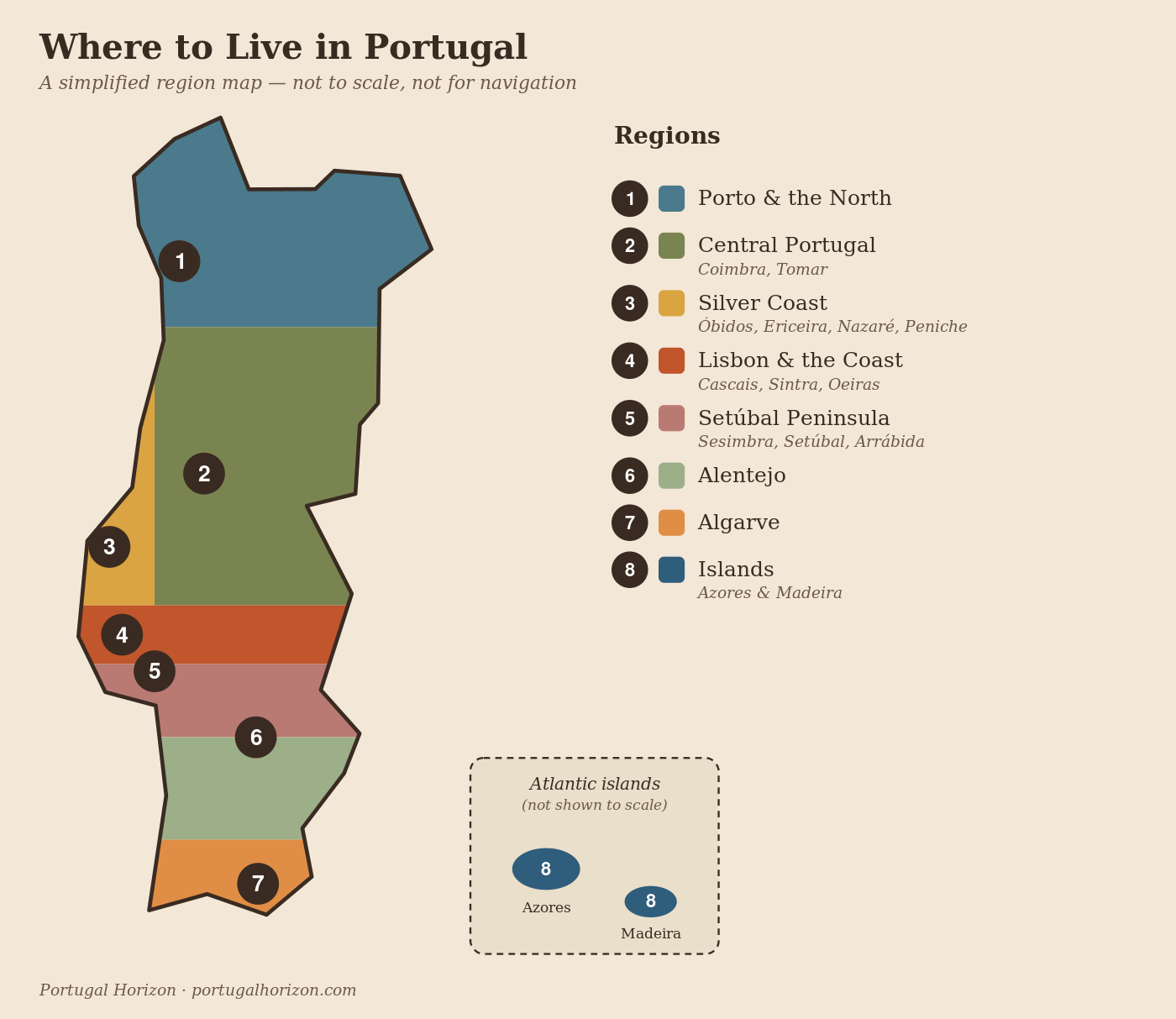
One honest caveat first.
These eight names are lifestyle groupings, the way people actually live and buy here, not Portugal's official administrative map.
I lost a whole evening to this when I first arrived, googling "what region is the Silver Coast in" and getting a different answer every time, slowly realising the reason I couldn't pin it down was that it isn't an official region at all. It's a tourism label.
A few of these names straddle the real borders: Nazaré and Aveiro technically sit in the government's "Centro" region, and Ericeira is officially Greater Lisbon. I've sorted everything by how a place feels to live in, because that's the version that matters when you're choosing, and because I'd rather you kept the evening I lost.
And one more, because it catches everyone out.
"Portugal is warm" is only half true. Temperatures swing hard from north to south, and even town to town within a single region, where a sheltered valley and a wind-scoured headland twenty minutes apart can feel like different countries. You'll meet Porto in a minute, beautiful beaches and all, rarely warm enough to swim in without flinching. It's part of why I say I didn't come for the weather, a subject I gave a whole post of its own.
1. Porto and the North
Lisbon's artsy, gothic sister. Broodier, cheaper, and quietly certain she's the better one.
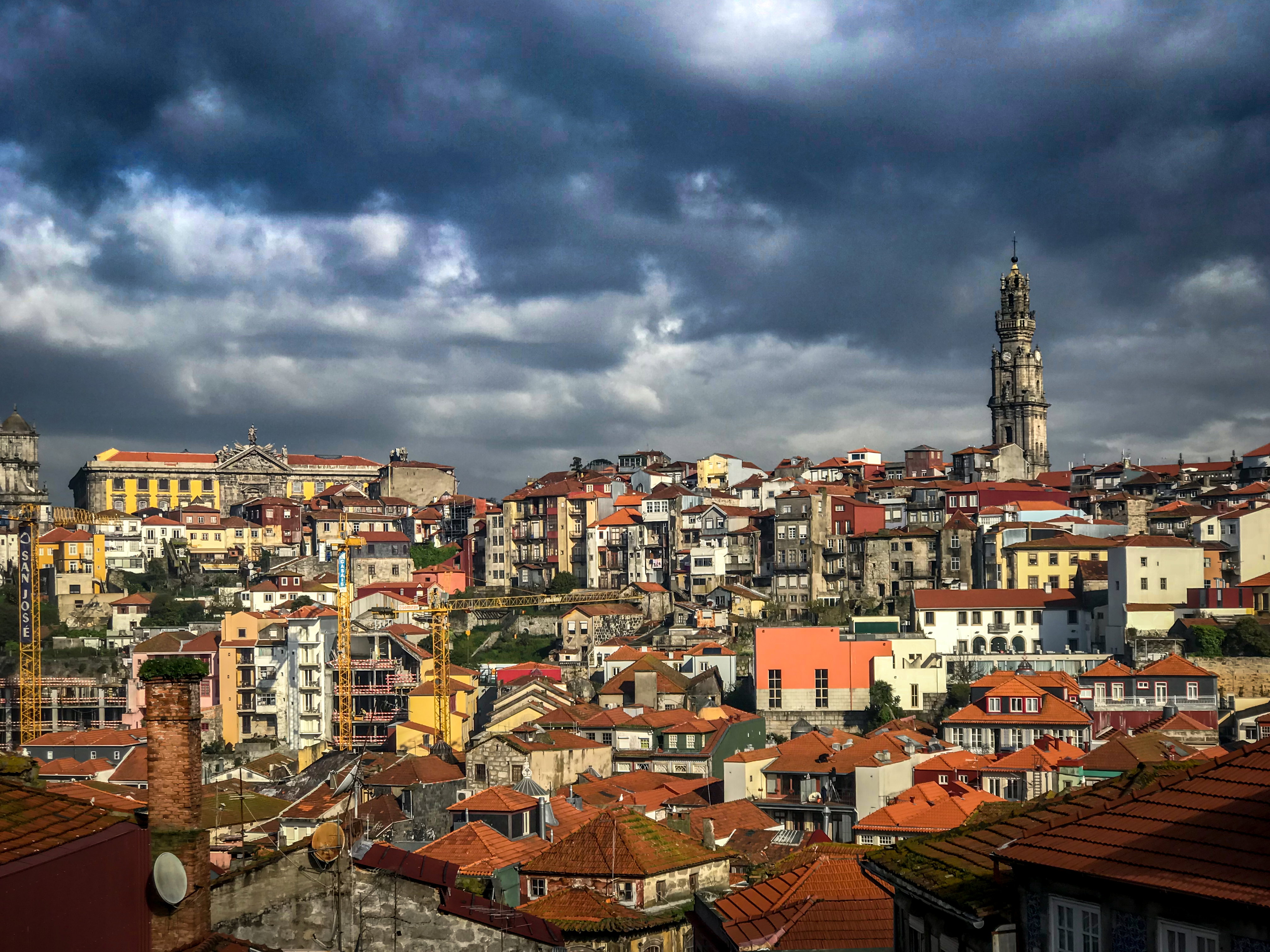
Porto is a real, working city with proper edges: steep, granite, a little moody, wrapped around a river with the port wine lodges lined up across the water in Vila Nova de Gaia.
And everyone forgets the beaches, which is their loss, because the wide Atlantic stretches right on the city's doorstep are genuinely beautiful, just never quite warm. Your money goes noticeably further here than in the capital.
North of it you get Braga and Guimarães, the town with "Portugal was born here" written on a wall and the receipts to back it up, and inland the Douro Valley, where the wine comes from and the views do the rest.
Then it rains. A patient, all-winter drizzle nobody puts in the brochure. But the people who move here get evangelical for a reason: a proper, modern city that's genuinely easy to live in, its own international airport, some of the best food in the country, and a cost of living that makes Lisbon look like an accounting error.
Swipe right if: you want a characterful city with the best food in the country, minus Lisbon's price tag.
Deal-breaker: six damp months would break your spirit.
2. Central Portugal
The clever, unshowy one everyone overlooks until they've actually spent time here.
This is the inland heart of the country, and it's the best value hiding in plain sight. The official "Centro" region actually runs all the way to the Atlantic, but by long habit everyone in the business, estate agents included, files its beach towns under the Silver Coast, so what's left here is the interior.
It is the greenest, most quietly scenic part of the country, all forested hills and slow river valleys, and the home of the praia fluvial, the river beach: a dammed bend of a river with a café and a lifeguard, where the whole town goes to cool off on a hot afternoon.
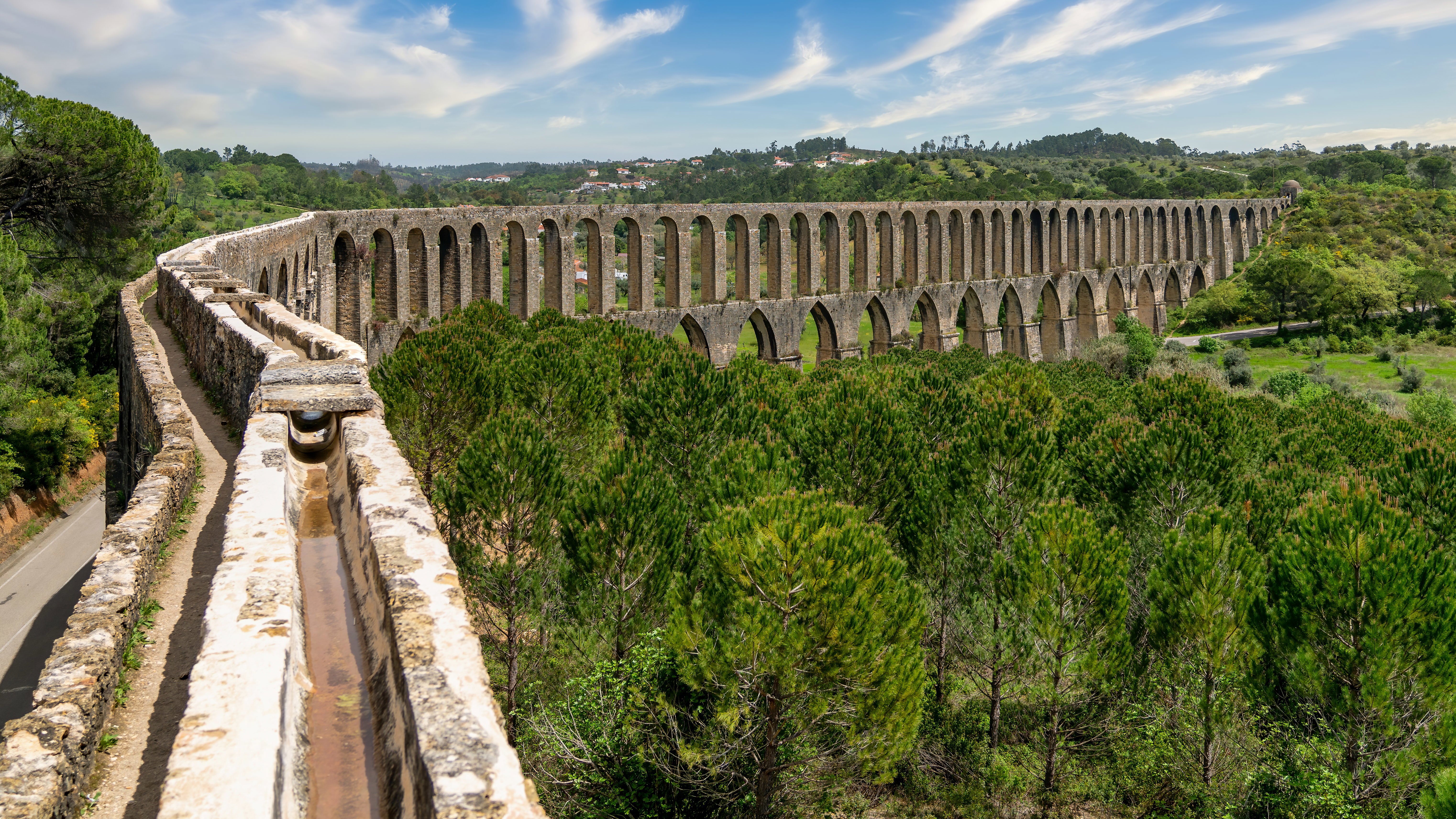
Coimbra is a hilltop university city, cobbled and slightly grand, kept permanently young by its students, with a real hospital and prices around half of Lisbon. An hour on, Tomar hands you a Knights Templar castle and a slower pulse. Further up, the Serra da Estrela gives you actual mountains and the only snow in Portugal worth mentioning.
Swipe right if: you want real affordability and a properly Portuguese daily life.
Deal-breaker: you need the actual ocean, or you need creature comforts.
3. The Silver Coast
The good-looking one with a wildly inconsistent dating profile.
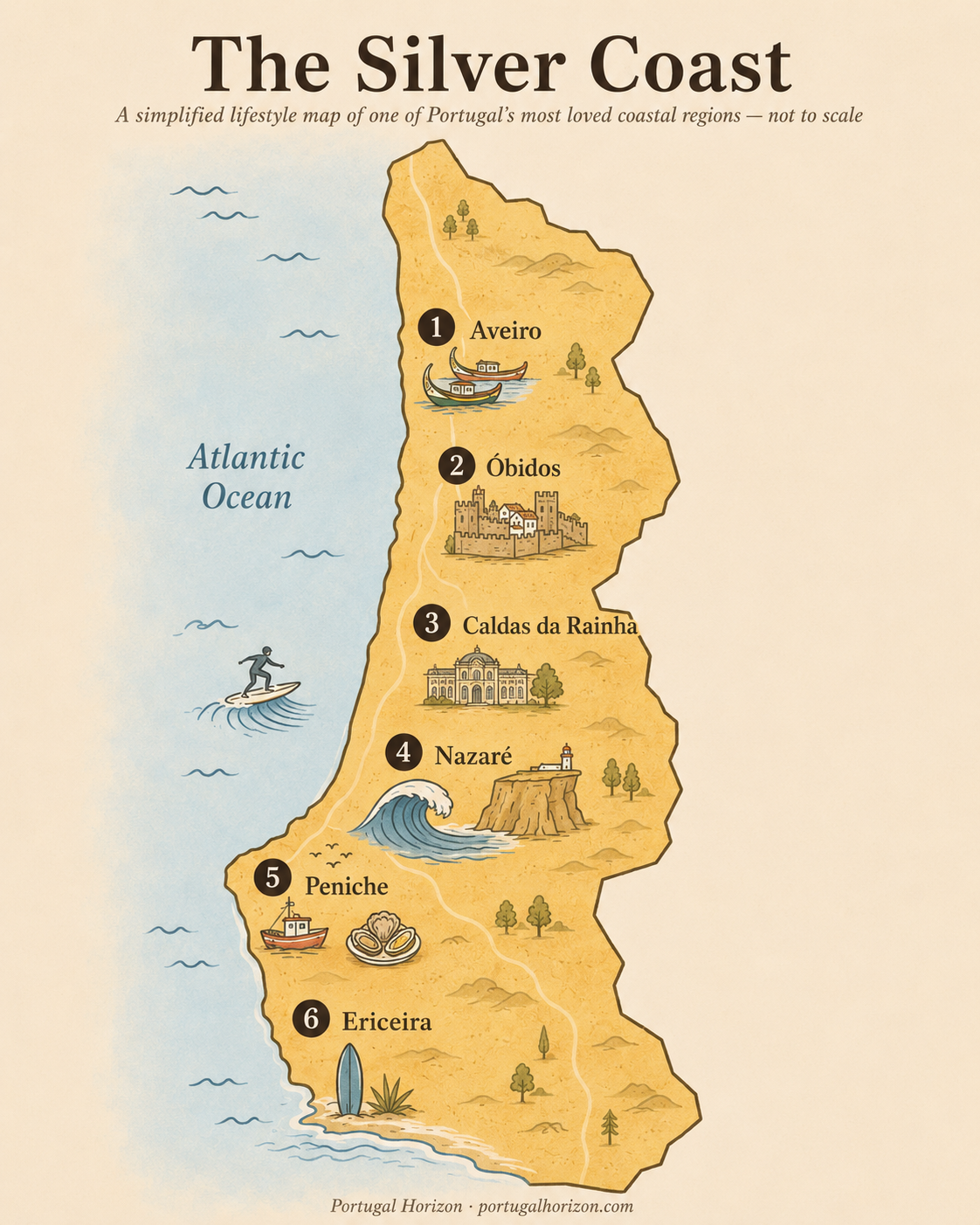
The Silver Coast is the long Atlantic stretch running down toward Lisbon, and it's less a place than a label draped over a lot of different towns.
At the northern end, Aveiro: canals, painted moliceiro boats, and the striped fishermen's houses of Costa Nova that end up on everyone's phone.
Come south and you hit Nazaré and its record-breaking winter waves, Peniche, the surf mecca of Ericeira (about forty-five minutes from Lisbon, and Europe's first World Surfing Reserve), the market town of Caldas da Rainha, and the walled postcard of Óbidos.
Prices swing from modest to smart depending purely on which dot you pick. Get the town right, though, and you land a rare combination: real Atlantic coast, real Portuguese life, and Lisbon close enough to visit but far enough to afford.
Swipe right if: you want the coast and real towns and you'll do your homework town by town.
Deal-breaker: you want dependable sunshine. This is the open Atlantic, cooler, windier and greyer than Lisbon and the south.
4. Lisbon and the Coast
The one everyone falls for first. Gorgeous, exhausting, and knows exactly what it's worth.
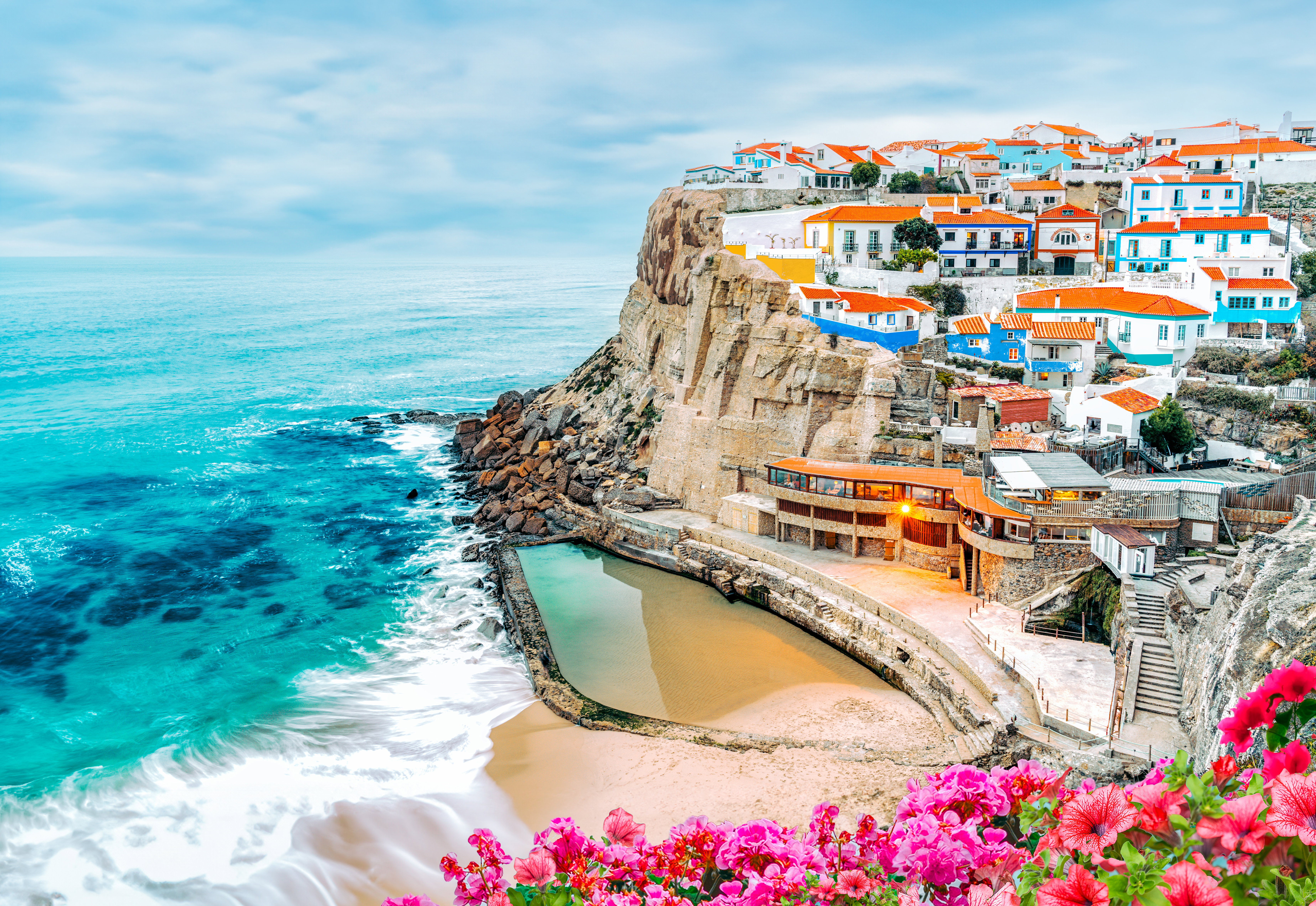
Quick boundary note, because it trips everyone up: when the market says "Lisbon and the coast," it means the city plus the coast north of the river, Cascais, Estoril, Oeiras and Sintra.
Everything across the water gets its own round next. That aside, this is the one that seduces people, and it earns it: light that turns the buildings gold at the end of the day, some of the best food in the country, and more art, music and culture than you could get through in a lifetime of trying. It's walkable in a way that ruins you for other cities, and it's where the deepest healthcare and international schools cluster.
Out along the coast, Cascais and Estoril do genteel-seaside, Oeiras does commuter-comfortable, and Sintra does fairy-tale palaces in its own damp little microclimate.
The catch isn't romantic: the traffic and the parking will test your patience, the centre can be loud, and in high season you share your favourite streets with half of Europe. But few places give you this much beauty, flavour and life in one walkable city. On a good evening, Lisbon feels like showing off.
Swipe right if: you want sunshine, food and culture on tap, and city energy every day.
Deal-breaker: your budget, probably.
5. The Setúbal Region
My one. So take the next bit with a pinch of Sesimbra sea salt.
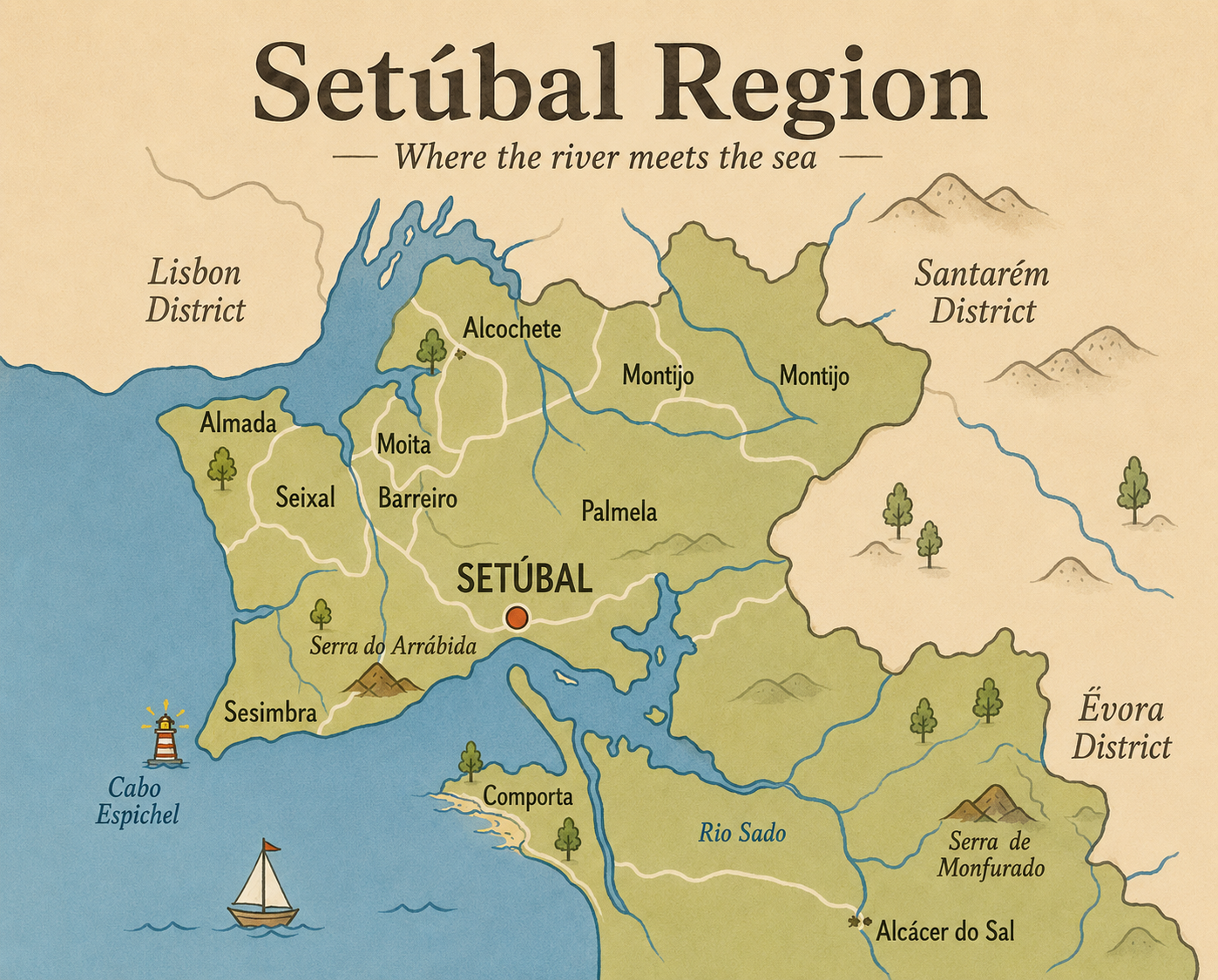
This region confuses people because it has several completely different faces, and yes, this is where Lisbon's commuter suburbs sprawl across the river.
Technically all of it is still Greater Lisbon, the same official metro area as the city, so if you want to call the towns just across the water "Lisbon," you are not wrong. But it is cheaper, it feels different, and everyone treats the south bank (Margem Sul) as its own place.
Almada sits closest, a quick hop over the bridge or a ferry ride away, so it commutes almost like a Lisbon suburb. Alcochete, further round the estuary past the salt pans, is a smaller, quieter town, ferry-linked too but a longer drive in.
Head down the Atlantic coast from the long Costa da Caparica beaches and it turns wilder and more beautiful the further you go, ending in Sesimbra, a picturesque fishing town of steep hills and a working harbour, and genuinely out of the way, with thin transport links and limited medical care. Just around the Arrábida hills, where they drop into water the colour of a brochure that didn't lie for once, sits Setúbal: a working city that is also artsy, charming and genuinely historic, flat and easy to walk, with dolphins in its estuary, proper wine, and fast trains and buses into Lisbon. It is still a bargain by Lisbon standards, though that window is closing quicker than locals like to admit.
Cross the Sado by ferry from Setúbal and the district saves its flashiest card for last: Comporta, all rice paddies, umbrella pines and dune-backed beach, priced closer to the Hamptons than to anywhere else on this map.
Swipe right if: you want Lisbon-adjacent without Lisbon prices, commuter or coastal, your pick.
Deal-breaker: you need it to still be a secret. It isn't.
6. The Alentejo
The vast, quiet one that will either be the love of your life or bore you to tears.
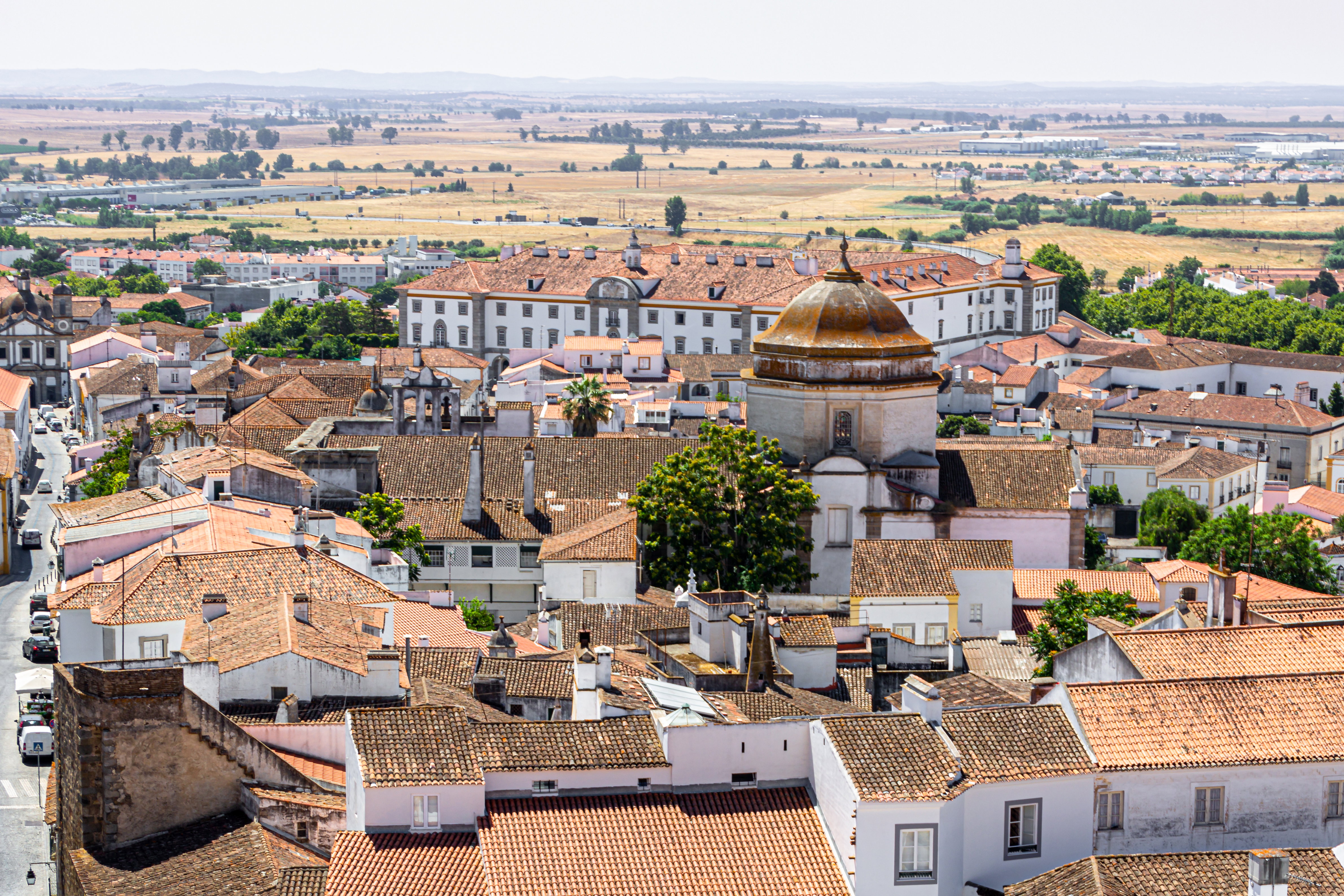
Inland it's cork trees, wine, whitewashed hilltop towns and skies that go on a suspiciously long time, anchored by Évora, a UNESCO city with a Roman temple still standing in the middle of it, and dotted with slower towns:
Alcácer do Sal on its rice-fringed Sado, Grândola out on the plains, and Beja deep in the south. Land and space are genuinely affordable out here.
And then there's the coast, a different animal entirely: Odemira and the wild Costa Vicentina (Vila Nova de Milfontes, Zambujeira do Mar), a protected surf coast where they can barely build, which is exactly why people who find it never shut up about it.
But whichever version wins you over, inland calm or that untouchable coast, you get space and silence the rest of Portugal quietly envies.
Swipe right if: you want land, space and real silence, or a piece of that untouchable coast.
Deal-breaker: you need things close by. Out here the nearest hospital, big supermarket or airport can all be a serious drive.
7. The Algarve
The popular one who peaks in summer and everybody's dated.
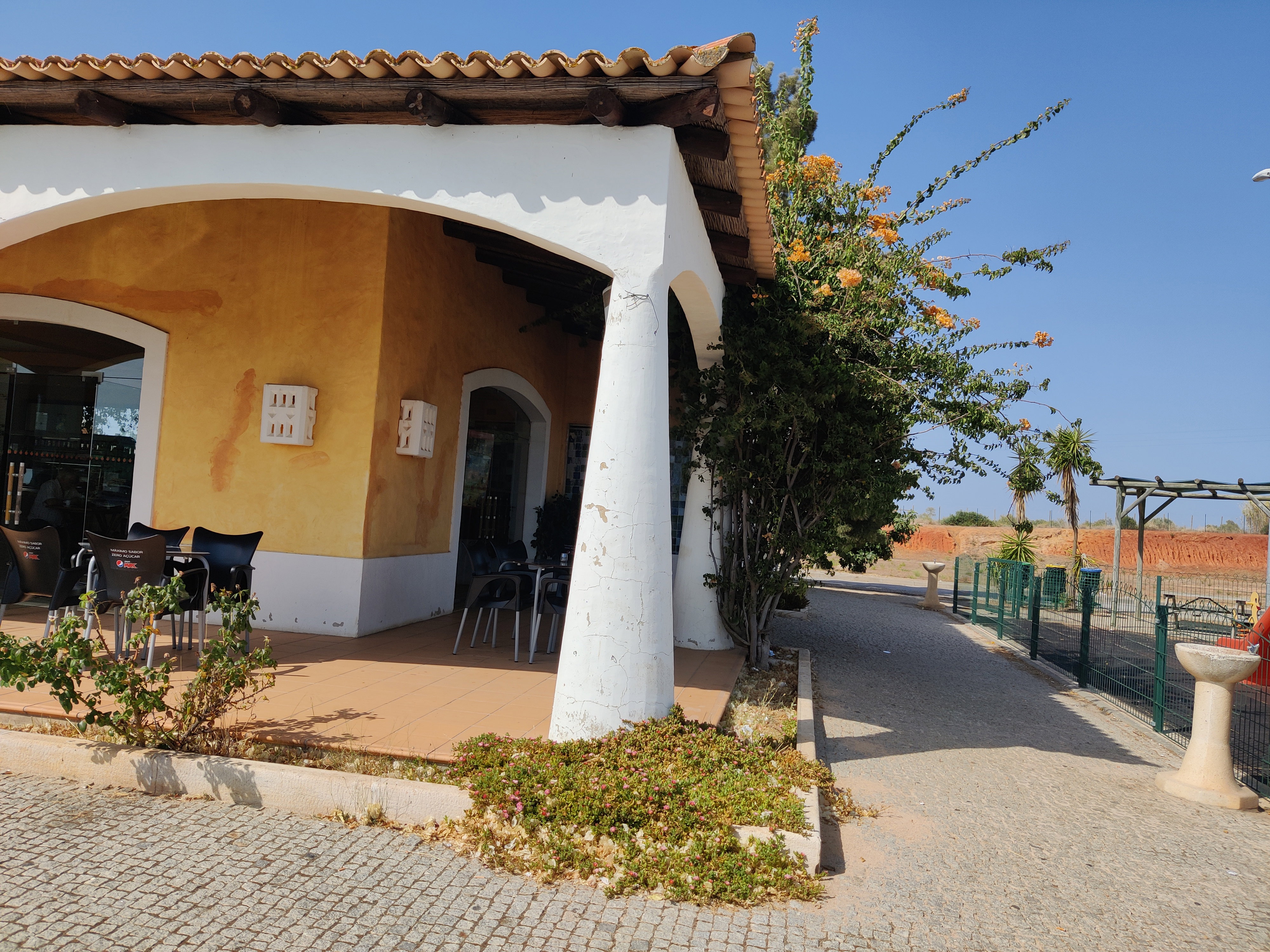
The Algarve is the most internationalised market in the country, which is a genuine kindness if you don't speak Portuguese yet, because you can arrive and simply function. It roars all summer and does a convincing ghost-town impression by November.
But strip away the golf-and-villas cliché and the coast itself is genuinely stunning: dramatic ochre cliffs, hidden sea caves, and a string of low sandbar islands off the eastern shore. Think Greece, with humility.
The east around Tavira is prettier and calmer, Lagos to the west is livelier, Albufeira is where the stag parties go, and the Golden Triangle around Almancil and Loulé (Quinta do Lago, Vale do Lobo) is where the postcode alone adds a zero.
And it is far more varied than its reputation: go west to Aljezur and the wild, surf-battered Costa Vicentina, or inland and up into the green hills around Monchique, and the manicured golf-coast Algarve feels like another country entirely.
Swipe right if: you want sunshine, English on tap, and a ready-made community.
Deal-breaker: the summer crowds, and winters that aren't as warm as you'd expect.
8. The Islands: Azores and Madeira
The long-distance relationship. Worth it for the right person, a lot of effort for the wrong one.
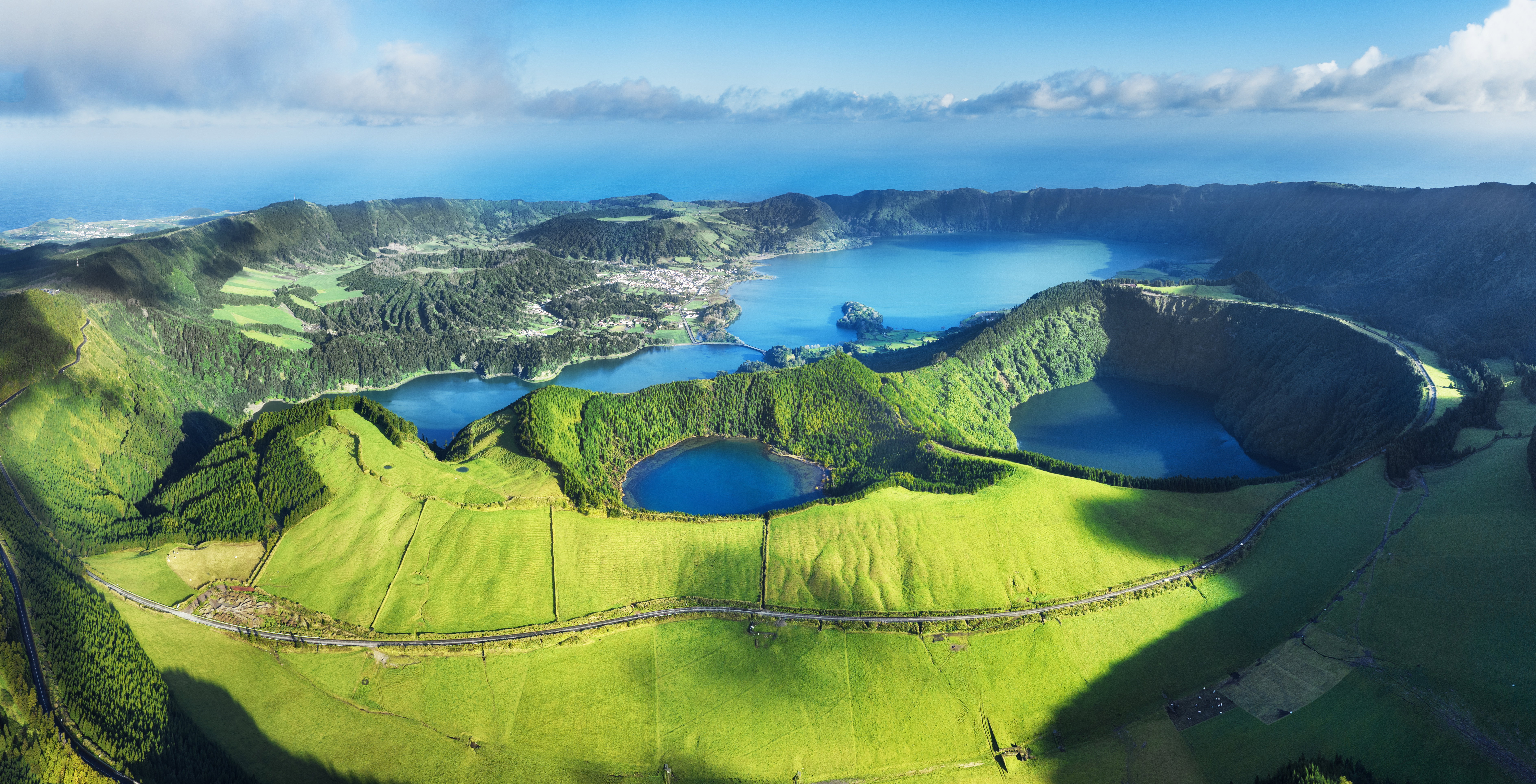
Out here the rules genuinely change, which is why they get their own category.
Madeira is warm all year, dramatically green, laced with those levada walking trails and centred on Funchal, which feels like a proper little city, right up until you remember how few flights connect it to the rest of the world. It has pulled steady foreign interest, with the prices to match.
The Azores are nine volcanic islands in the middle of the Atlantic, greener, wilder, cheaper, and further from everything, small-town life taken to its logical extreme. You arrive by plane, not car, and the weather doesn't just have opinions out here, it makes your plans for you, grounding the flight or the ferry whenever it feels like it.
And the property markets are too thin to line up neatly against the mainland. But get it right and you wake up somewhere most people only ever get to visit, at a pace and in a landscape the mainland simply can't offer.
Swipe right if: you want real distance and a horizon most people only get on holiday.
Deal-breaker: you'd resent trading a nearby supermarket for a volcano view.
So, who did you swipe right on?
I'm not going to pretend there's a formula, because there isn't, and the people selling you one are selling you something. But you probably felt a yes or two while reading, and a hard no or three. That's the map narrowing itself. Follow it.
A word about prices before you go deeper, because it's the thing that catches everyone out: Portugal has no public register of what property actually sold for. You can stare at asking prices forever and never learn what changed hands, which is exactly why the usual comparables don't mean what you think.
So once you've picked a region, the smartest thing you can do is get someone on your side of the table who knows what the real numbers are, in a market that keeps them deliberately hidden. That's not a sales pitch. It's just the terrain.
Next, I start the proper dates, one region at a time, beginning with the one I already know from the inside.
I'm Moira.
I've bought, sold, rented and Airbnb'd my way around Lisbon and the Setúbal Peninsula, and turned up to the rest of this list with a rental car, a notebook, and an unreasonable number of coffees, trying to work out what the brochures leave out. I write Portugal Horizon for South Africans, Brits, Americans and anyone else standing at the start of this with a map they can't read yet.
Consider this your first orientation. Tell me who you swiped right on.